Let me start the way an operator starts, not with hype, but with market mechanics.
Most people in AI talk about tools. I talk about cycles, because tools change every quarter, markets, moving waves, and if you learn to read waves, you stop chasing features and start capturing timing.
That's what this blog's about. And AI awareness cycle isn't what developers are excited about, what Twitter is hyping about or what engineers are building. It's the moment when business owners finally realise this affects my revenue now.
That's when money moves.
And right now, that moment is happening around one thing, websites.
Why websites and why now? Well, websites aren't new, but their role has changed completely. For 20 years, a website was a brochure, a business card, or a checkbox.
Now it's something else entirely. It's become the conversion home-base of the internet, and that isn't emotional, it's technical.
Let me break down the technical forces that are creating this cycle and it's four predominant reasons. So let's go ahead and look under the hood.
-
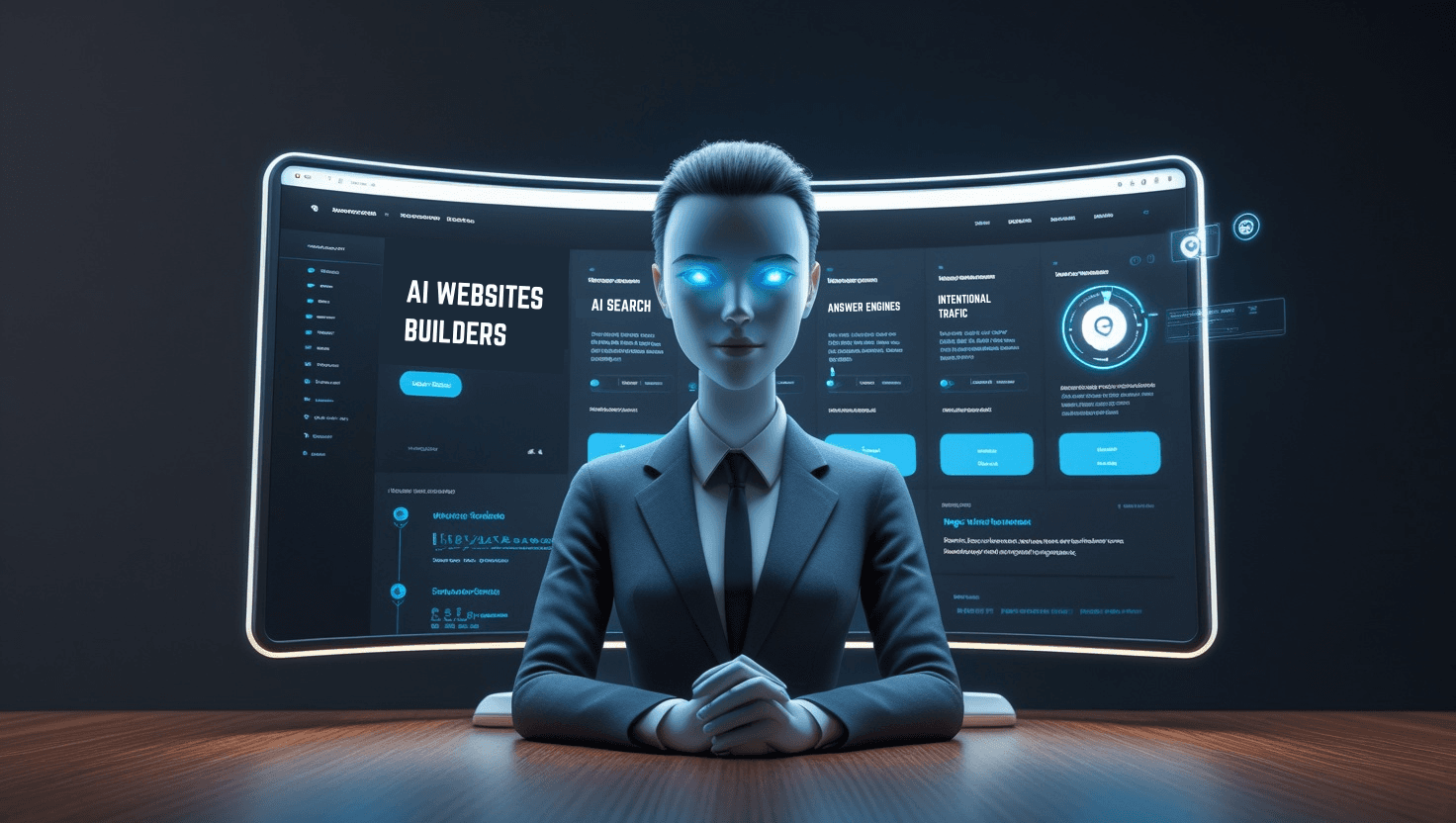
AI driven search is changing traffic. Search is no longer just links. It's answers. You see, AI summarises, assist responses, and zero click experiences. And this means fewer random clicks, fewer casual visitors, and more intentional traffic. So the website is no longer a place people browse, it's a place people decide. When they land, they're already halfway convinced or halfway sceptical. That means the website now has one job, convert trust into action.
-
The rise of AEO. Answer Engine Optimisation. It's not just SEO anymore. It's structured pages, clean FAQs, authority signals, proof blocks, clarity over cleverness. Businesses are waking up to the fact if AI is answering questions for customers, my website needs to be a place AI points to. That's not marketing, fluff, that's distribution logic.
-
The explosion of landing page economics. Modern growth isn't built on one homepage. It's built on one page per offer, one page per audience, one page per campaign, one page per channel. Businesses now need website systems, not websites. And that creates demand, not for designers, but for operators who can build conversion infrastructures.
-
Platforms are training the market when Wix, Web Flow, Framer, or Shopify, all push AI website building into the mainstream, that's not a tech trend. That's a market conditioning. Business owners now begin think, hmm, AI websites are normal, which changes expectations and expectations, changes spending.
And before we move on, I want you to understand that most of you might think that these cycles are about innovation.
They're not. They're about perception shifts.
Markets move when perception changes from, that's interesting too We can't ignore this anymore. Right now, businesses feel pressure to modernise, pressure to convert better, pressure to look credible, and pressure to keep up.
They don't say we need AI. They say we need a better website. That's how awareness shows up in the real world.
So what's the strategic meaning of this? Well, AI hasn't changed how websites are built. It's changed what websites are responsible for.
They are no longer informational, passive, or optional.
They are now revenue engines, trust machines, and conversion hubs, right? So, this means the website is where AI becomes visible, and visible value is what sells.
I've seen this pattern in every emerging market. Money never flows 1st to the deepest tech or the smartest tools, the most advanced systems.
It flows to the clearest outcome, the easiest win, the most obvious upgrade.
Right now, that upgrade is my website, looks sharper, converts better, and feels modern. Every business understands that. Every owner feels that and every operator can sell them.
So how does this fit in the wave model? Well, think about it. Every wave follows the same structure. Innovation, hype, confusion, clarity, adoption, whatever words you want to use describe it. It's that up and down motion.
We are between clarity and adoption. Businesses now know, AI affects websites.
AI changes expectations, and AI raises the entire standard.
So the next question becomes, who can do this for me properly? And that's where we enter the market.
Cycle aligned prototypes, not random demos, not shiny toys, prototypes that show how websites become conversion systems, how AI enables that role, how fast a business can move with the right operator, these prototypes become your outreach assets, your sales leverage, your credibility engine.
This is where awareness turns into revenue-grade assets.
Talk soon,
Bineet
P.S. If you're wondering whether your website is ready for this next phase, we'd be happy to take a look. Book a Complimentary Website analysis, and we'll show you where your website stands today, where it's falling short, and the opportunities to turn it into a stronger conversion engine for your business.